On the afternoon of February 3, a gamekeeper and a game warden were visiting feeding areas, delivering carrots and grain to the animals. "About 2-3 km from Duboy, we emerged from the forest onto a dirt road and saw a stopped car. At first, we thought there had been an accident, but we drove up there. A man and a woman were standing there, and next to them lay a young roe deer, about six months old. She was exhausted. Apparently, the mother had died, and the cub had wandered onto the road. People were feeding her bread, and she was eating from their hands," said Yuri Rudinsky. According to him, roe deer are usually frightened by people and run away. The cub, however, remained steadfast, as if waiting for help. In the Stolin district, snowdrifts are knee-high and higher. The thaw and subsequent frost had caused a crust to form, which is injuring the animals' legs. "We called the veterinarians to find out what to look for. They examined the deer and found no injuries. She didn't move, but stood nearby, mostly clinging to our legs," the gamekeeper noted. After considering the situation, the forestry workers took the deer into their UAZ.
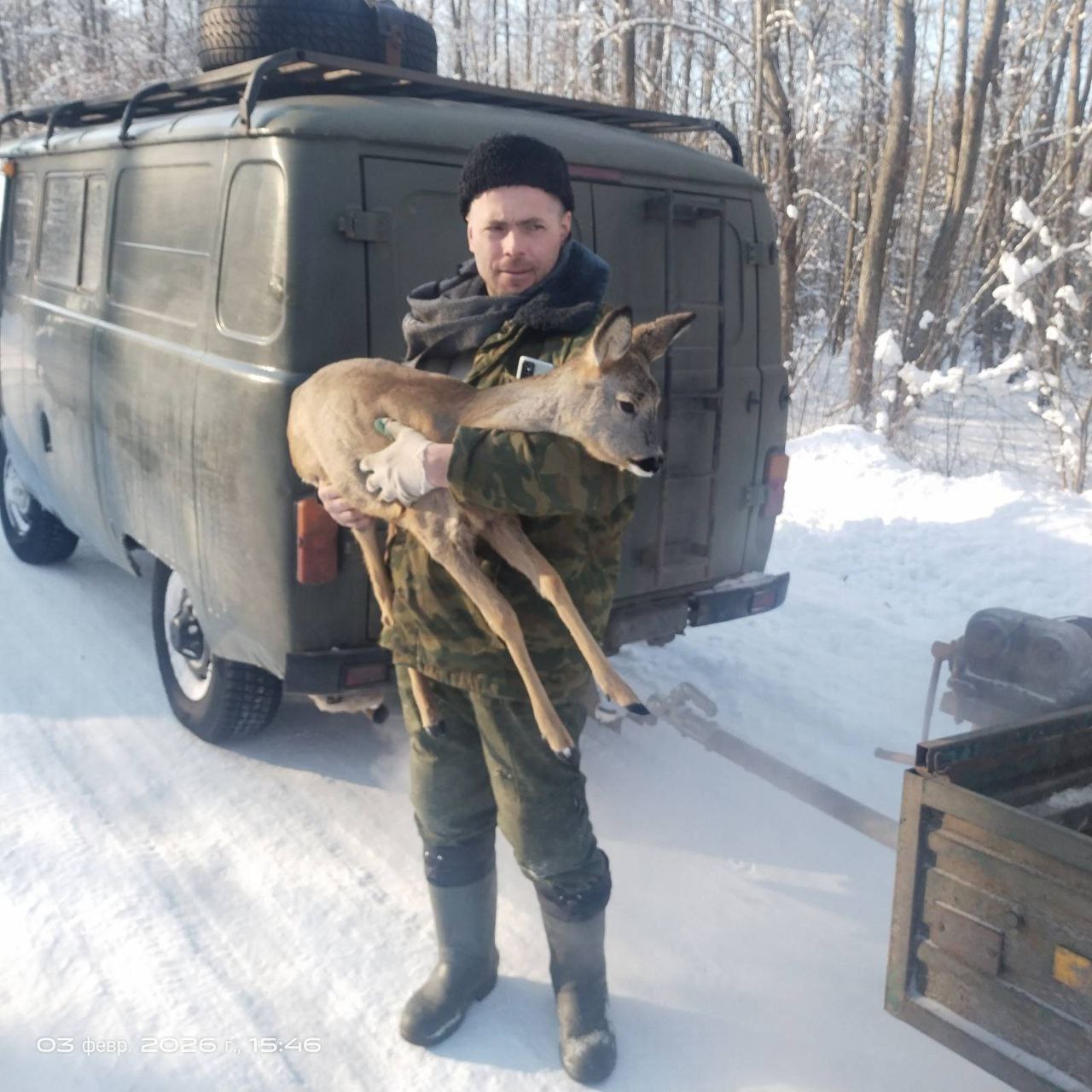
"We turned on the heater near the back seats. She barely moved, crouched, apparently tired from walking in all that snow. After half an hour, the deer warmed up. We poured some grain into a bucket, and she ate. She even let us pet her," added Yuri Rudinsky. Experts know the areas where large numbers of deer congregate. One of these areas has a feeding area. They took the little one there. "She's a young animal; she won't survive on her own. If we leave her, wolves or dogs will eat her. We took her to a feeding area and left her some grain there. Roe deer now travel in herds of 20-50 individuals, which makes it easier for them to feed. Today, I was making a round, adding food to the feeding areas. Our deer wasn't there. 100% of the deer accepted her into the herd, and she left with the other deer," the ranger explained. The Stolin Forestry Enterprise has three ranger patrols, each with about a dozen feeding areas. Grain, salt, potatoes, and carrots are delivered there several times a week. Yuri Rudinsky has been a ranger at the forestry enterprise for 11 years. He says he hasn't seen such a harsh winter in a long time. The animals have a very difficult time in such conditions. "During Javier, there wasn't such frost, and so much snow didn't stay for so long. Now there's a crust of ice on the snow, and the animals can't get to the grass. It's very difficult for them. Roe deer, hares, and partridges are having the hardest time. We feed them at feeding sites. Elk only come to the salt licks. They eat branches and bark. They get it themselves," the man concluded.


